Planning a senior banquet is basically hosting the best dinner party of your school’s year, with a few hundred guests and a very opinionated slideshow. The good news: with a clear plan, it’s a blast to pull off.
This guide gives class officers and parent committees the graduation banquet ideas, sample program, and budget checkpoints you need to go from “we should do something” to a night people actually remember.
Quick answer: Pick a date and budget first, then lock a venue and menu about 3 to 4 months out. Build a program of roughly 2 hours (welcome, dinner, slideshow, awards, thank-yous), keep decor simple with a strong theme, and track costs per head with a few firm checkpoints. Start with a small committee and clear jobs, and the night runs itself.
Start with the Basics: Date, Headcount, Budget
Before you tour a single venue, answer three questions. They shape every other choice you make.
- Who’s invited? Seniors only, seniors plus parents, or seniors plus teachers and guests?
- When? Spring is classic, but avoid AP exam weeks, prom weekend and graduation week crunch.
- How much per person? Decide a target ticket price now, then work backward.
Check your school calendar and get facility and chaperone approvals in writing. Schools often have rules about outside venues, guest lists and fundraising, so ask early.
If you’re still building your officer team, our Senior Class Officer Ideas playbook covers how to divide the work.
A great banquet is 20% fancy and 80% organized.
Venue Options (and What They Usually Cost)
The venue sets the tone and eats the biggest chunk of your budget. Here are the options most committees consider.
On-campus spots
- Cafeteria or gym: Cheapest and easiest to approve, and a good decor project can transform it.
- Library or commons: Cozy for smaller classes, with built-in AV in many schools.
- Auditorium plus courtyard: Program inside, dinner outside if weather allows.
Off-campus spots
- Community hall or church hall: Affordable, flexible about outside catering.
- Banquet hall or event venue: Polished and often includes tables, chairs and staff.
- Country club or restaurant back room: Great atmosphere, but check minimums and capacity.
- Park pavilion or fairgrounds: Casual and budget friendly, just have a rain plan.
When you tour, ask about capacity, AV and projector access, parking, accessibility, load-in time, cleanup rules, and whether outside food or decor is allowed.
Menu Ideas for Every Budget
Food is the second big cost, and the easiest place to overspend. Pick a style that fits your crowd, then get a headcount-based quote.
Menu styles
- Plated dinner: Most formal, with choice of two entrees and a vegetarian option.
- Buffet: Crowd-friendly, flexible, and usually cheaper per head.
- Food stations: Pasta bar, taco bar or sliders keep lines moving and feel fun.
- Family-style platters: Cozy and social, great for smaller groups.
- Potluck plus catered main: A parent-powered way to stretch the budget.
- Dessert-only reception: A lighter option for an evening awards night.
Dietary needs
Collect allergies and dietary needs on the RSVP form, not at the door. Always offer vegetarian, gluten-free and nut-aware options, and label everything clearly.
A Sample Banquet Program
A banquet should feel lively, not like a very long assembly. Aim for about two hours of program, with dinner mixed in so nobody sits through too much talking at once.
| Time | Segment | Notes |
|---|---|---|
| 0:00 | Doors, photo wall, mingling | Background playlist, name tags or table cards |
| 0:30 | Welcome and blessing or toast | Class president or emcee, 3 minutes max |
| 0:35 | Dinner served | Slideshow loop or music playing |
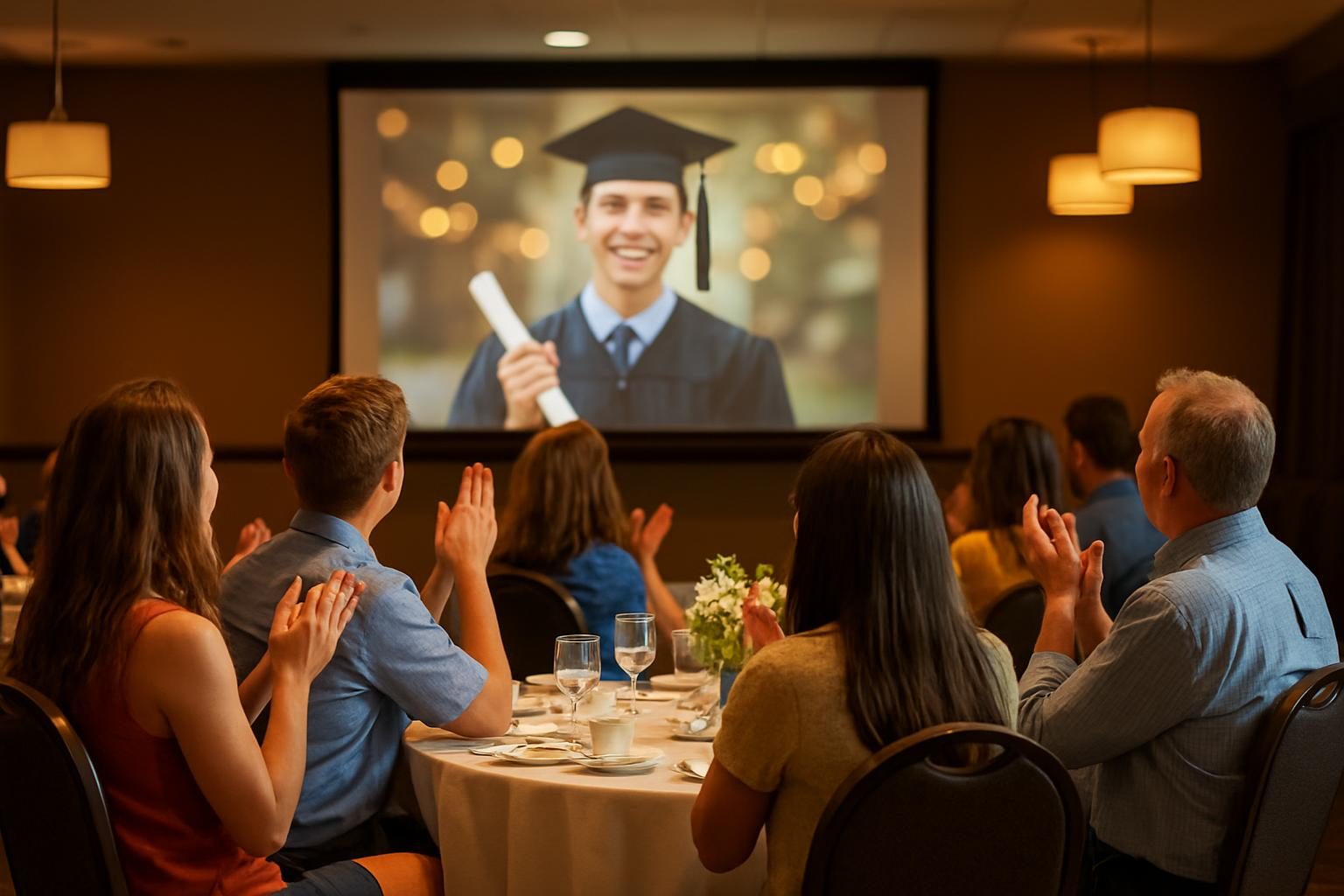
| 1:05 | Senior slideshow | 6 to 10 minutes |
| 1:15 | Awards segment | 20 to 30 minutes, mix serious and silly |
| 1:45 | Thank-yous and teacher shout-outs | Keep it short and heartfelt |
| 1:55 | Closing words and class photo | Everyone together, ideally in matching shirts |
| 2:00 | Dessert, dancing or free time | Optional, based on venue |
Keep the speeches short and the slideshow long enough to make people cry-laugh.
The Slideshow Segment
The slideshow is usually the emotional peak, so give it real planning time. Start collecting photos at least six to eight weeks ahead.
- Then and now: Kindergarten or elementary photos paired with senior portraits.
- Four years in review: One section per grade, with big moments from each.
- Teacher and staff cameo clips: Short messages to the class.
- Senior superlatives montage: Quick candid shots of each winner.
- Parent and family tribute: A few baby photos get the whole room.
Slideshow rules of thumb
- Aim for one photo per senior, minimum, so nobody is left out.
- Choose songs you have the right to use for your event, and ask the school about licensing.
- Keep captions school-appropriate and avoid inside jokes that embarrass people.
- Test it on the venue’s projector and speakers beforehand.
For photo inspiration to pair with your slides, check out our senior pictures ideas, and consider a keepsake like a senior year memory book to give out at the end.
Awards Segment Ideas
Awards are where the room gets loud, in a good way. Mix a few meaningful honors with plenty of lighthearted ones, and make sure everyone gets a moment if you can.
Meaningful awards
- Most Improved
- Spirit and Service Award
- Teacher’s Choice
- Kindest Senior
- Courage and Perseverance
Fun awards (kept kind)
- Most Likely to Be Early to Everything
- Best Hallway Laugh
- Group Chat MVP
- Most Likely to Start a Club in College
- Snack Hero of the Class
Pro tip: Have nominations come from classmates and teachers, but let a small committee review them first. That keeps awards kind, inclusive and free of anything that could single someone out.
Printed certificates or small keepsakes make the moment feel real. If you want quotes for award cards or speeches, browse our senior night quotes.

Decor That Looks Great Without Wrecking the Budget
Pick one theme and one color palette, then repeat them everywhere. Consistency beats quantity every time.
- Theme ideas: “Starry Night,” “Golden Hour,” “Class of 2027 Hall of Fame,” or your school colors.
- Photo wall: A backdrop plus props for senior photos at the entrance.
- Table centerpieces: Framed senior photos, grad caps or candles in safe holders.
- Memory table: Display yearbooks, team jerseys and club items.
- Banner and signage: A welcome banner, table numbers and a program board.
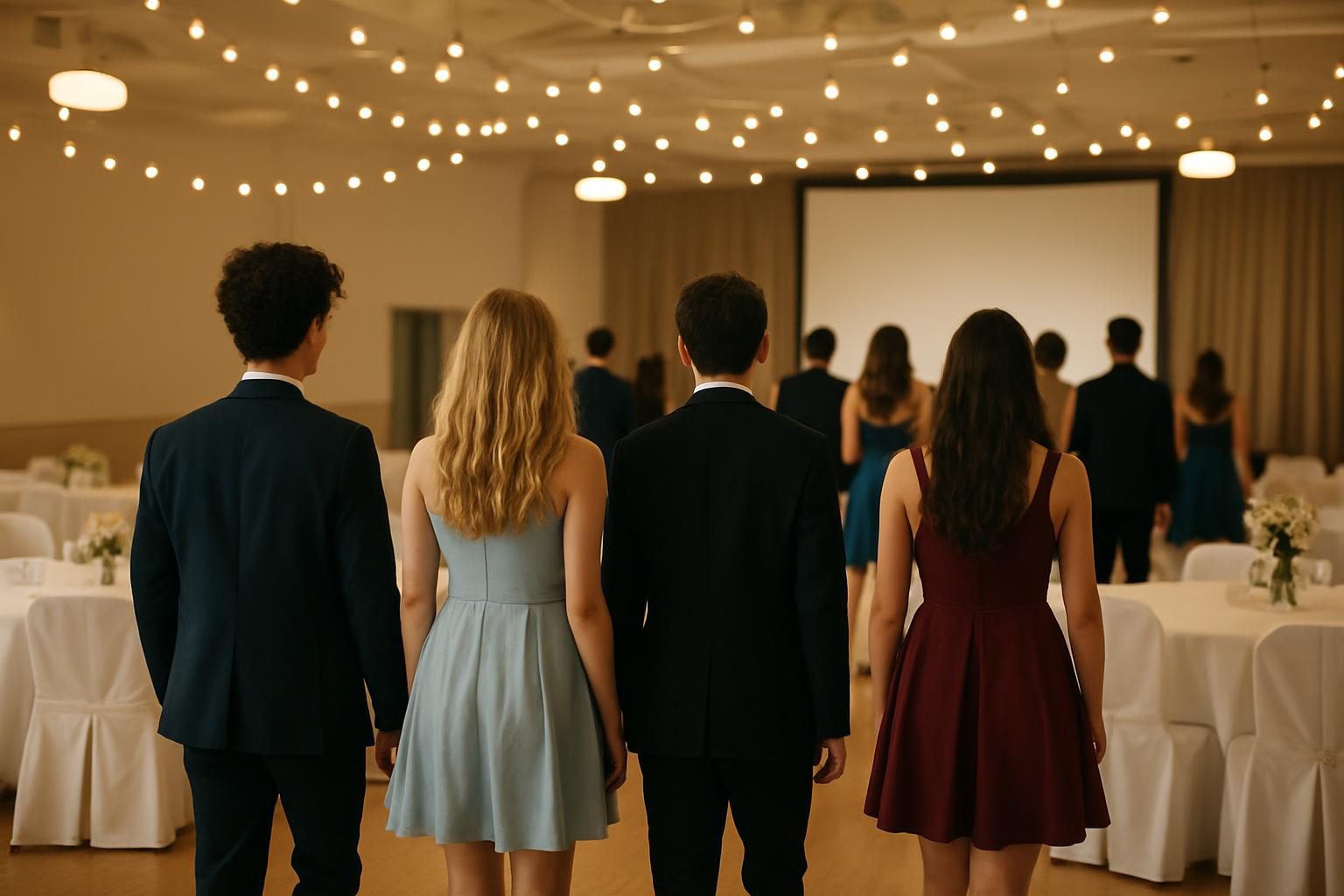
- Lighting: String lights are the cheapest glow-up there is.
Matching shirts or hoodies for the officer team make the night feel unified and are easy to spot if guests have questions. If you want your officers, a club or the whole class in coordinated gear, you can get a quote on custom class shirts and have them printed in bulk, along with a banner or yard sign for the entrance. See our senior shirt ideas for slogans and design inspiration.
Budget Checkpoints and Timeline
Money problems at a banquet are almost always timing problems. Use these checkpoints to stay ahead.
| When | Checkpoint | Done? |
|---|---|---|
| 4 to 5 months out | Approve date, budget and guest list with school | Yes or no |
| 3 to 4 months out | Sign venue and caterer contracts | Yes or no |
| 2 months out | Open RSVPs, set ticket price, start photo collection | Yes or no |
| 6 weeks out | Order decor, printed programs and awards | Yes or no |
| 3 weeks out | Final headcount, dietary list, AV test | Yes or no |
| 1 week out | Confirm vendors, finalize run-of-show | Yes or no |
Typical cost breakdown (estimates)
Costs vary a lot by region and venue, so treat these as rough shares of your budget rather than fixed prices.
- Venue: often 25 to 40 percent
- Food and drinks: often 35 to 50 percent
- Decor, printing and awards: often 10 to 15 percent
- AV, photographer or extras: often 5 to 10 percent
- Cushion for surprises: keep 10 percent in reserve
To offset costs, look at sponsorships, ticket sales and a few senior class fundraiser ideas. For the bigger picture of what families spend across the year, see our upcoming guide to senior year costs.
Custom group orders
Class officers: one quote for the whole class
Class shirts, hoodies, senior gifts and banners in bulk. Tell us the quantity and deadline and we handle the rest. Tell us what you need and get a free, no-obligation quote.
Key takeaways
- Set date, headcount and per-person budget before touring venues.
- Choose a menu style that fits your crowd and collect dietary needs on the RSVP.
- Plan about two hours of program, with dinner woven between segments.
- Start slideshow photos 6 to 8 weeks out and include every senior.
- Keep awards kind, inclusive and reviewed by a small committee.
- One theme and one color palette beat a pile of mismatched decor.
- Use budget checkpoints and keep a 10 percent cushion.
Want more planning help? Browse the full Parents & Class Officers section, and pair your banquet with the rest of the season using our graduation ideas guide and senior year traditions.
Frequently asked questions
How far in advance should we plan a graduation banquet?
Start about four to five months ahead. That gives you time to get school approval, book a venue and caterer, and collect slideshow photos without rushing.
How much should a senior banquet ticket cost?
It depends on your venue and menu, so work backward from your total budget divided by expected guests. Many committees subsidize tickets with fundraising or sponsors to keep prices fair for all families.
How long should a graduation banquet program be?
About two hours is a good target, including dinner. Short speeches, a tight slideshow and a well-paced awards segment keep energy high.
What are good awards for a senior banquet?
Mix meaningful honors like Most Improved or Kindest Senior with light, kind-hearted ones like Group Chat MVP. Review nominations as a committee so every award stays positive and inclusive.
Can we hold a banquet on a small budget?
Yes. Use the school cafeteria or a community hall, choose a buffet or potluck-plus-catered main, and keep decor simple with one theme and string lights.